Moroccan beauty
Is Argan Oil Good for Low Porosity Hair? The Complete Guide
Is argan oil good for low porosity hair? Discover why its lightweight molecular size penetrates tightly closed cuticles without buildup, plus step-by-step routines.
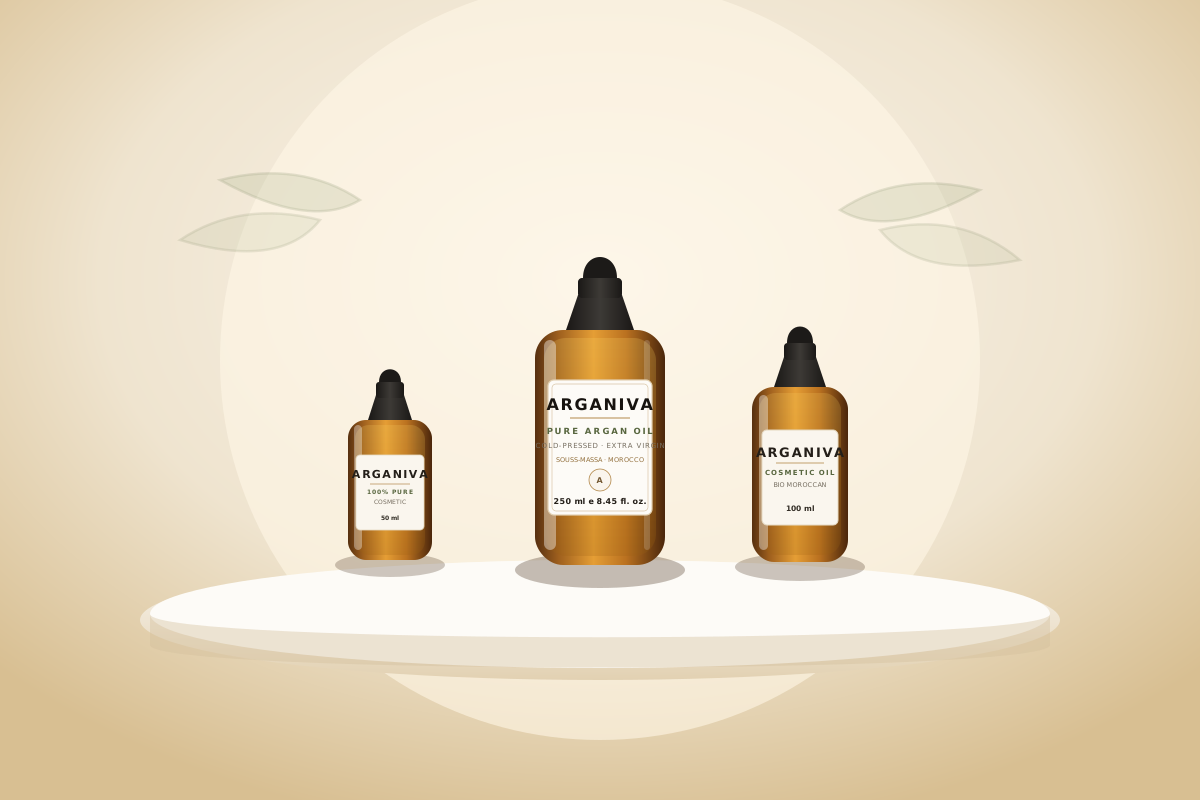
Is Argan Oil Good for Low Porosity Hair? The Science of Penetration
If you have low porosity hair, you know the frustration: hair products seem to sit on the surface of your strands like a slick film, water beads up when you step into the shower, and heavy oils leave your hair looking greasy and feeling surprisingly stiff and dry.
Low porosity hair is notorious for being moisture-resistant and easily overwhelmed by heavy hair care ingredients. Heavy butters (like shea butter) and dense saturated fats (like coconut oil or castor oil) frequently cause massive product buildup, dullness, and protein overload on low-porosity strands.
This leads to an essential question: Is argan oil good for low porosity hair, or will it cause the same heavy buildup?
The answer is a resounding YES: Pure Moroccan argan oil is one of the single best botanical oils in the world for low porosity hair.
Because of its lightweight molecular structure, high concentration of unsaturated fatty acids, and unique slip, argan oil is capable of navigating tightly sealed cuticles without leaving a suffocating, greasy residue.
This guide explains the science of hair porosity, why low porosity hair rejects heavy oils, and exactly how to use argan oil to achieve deep, weightless hydration.
Quick Reference: Low Porosity vs. High Porosity Hair
┌──────────────────────────────────────┬────────────────────────────────┐
│ LOW POROSITY HAIR                    │ HIGH POROSITY HAIR             │
├──────────────────────────────────────┼────────────────────────────────┤
│ • Cuticles tightly clamped shut      │ • Cuticles raised, chipped, gaps│
│ • Resistant to water & moisture      │ • Absorbs water instantly       │
│ • Prone to product buildup & grease  │ • Loses moisture just as fast   │
│ • Takes hours or all day to dry      │ • Dries very quickly            │
│ • Needs: Lightweight oils + Heat     │ • Needs: Heavy sealing lipids   │
│ • **Argan Oil: Ideal Daily Sealant** │ • **Argan Oil: Cuticle Glaze**  │
└──────────────────────────────────────┴────────────────────────────────┘
1. What Is Hair Porosity and Why Does It Matter?
Hair porosity refers to your hair’s ability to absorb and retain moisture. It is determined by the physical structure and arrangement of the cuticle—the outermost protective layer of the hair shaft.
                    ┌─────────────────────────┐
                    │    CUTICLE ARCHITECTURE │
                    └────────────┬────────────┘
                                 │
         ┌───────────────────────┴───────────────────────┐
         ▼                                               ▼
┌─────────────────────────────────┐   ┌─────────────────────────────────┐
│       LOW POROSITY CUTICLE      │   │      HIGH POROSITY CUTICLE      │
├─────────────────────────────────┤   ├─────────────────────────────────┤
│ • Cuticle scales lay flat, tight│   │ • Cuticle scales lifted, jagged │
│   and overlapped like shingles  │   │   and chipped from damage       │
│ • Forms an impermeable barrier  │   │ • Large gaps allow water in,    │
│ • Hard to get moisture IN       │   │   but moisture evaporates fast  │
│ • Once in, moisture stays in    │   │ • Easily prone to dryness & friz│
└─────────────────────────────────┘   └─────────────────────────────────┘
The Anatomy of Low Porosity Hair
Under an electron microscope, low porosity hair features cuticle scales that are tightly aligned, smooth, and clamped shut like tiles on a roof.
- This is typically a sign of healthy, undamaged hair with intact keratin structure.
- The Dilemma: Because the cuticle layer is so tightly bound, it acts as a waterproof shield. Water molecules and botanical nutrients cannot easily slip between the cuticle scales into the inner cortex.
If you apply a heavy, high-molecular-weight oil (such as coconut oil or olive oil), the oil molecules are physically too large to penetrate. They remain stuck on the outer cuticle surface, creating a waxy, sticky buildup that attracts dirt and blocks subsequent moisture from entering.
2. Why Argan Oil Works Beautifully on Low Porosity Hair
Pure cosmetic argan oil succeeds on low porosity hair where heavier oils fail for four fundamental biochemical reasons:
                    ┌───────────────────────────────┐
                    │   WHY ARGAN OIL PENETRATES    │
                    │      LOW POROSITY HAIR        │
                    └───────────────┬───────────────┘
                                    │
         ┌──────────────────────────┼──────────────────────────┐
         ▼                          ▼                          ▼
[UNSATURATED LIPID PROFILE]   [LIGHTWEIGHT VISCOSITY]    [ZERO PROTEIN BUILDUP]
Oleic (~46%) & Linoleic (~34%) Silky glide slips between  Unlike coconut oil, argan
fatty acids bend & glide      tight cuticle scales       does not overload proteins
1. High Unsaturated Fatty Acid Content
Argan oil is composed of over 80% unsaturated fatty acids, primarily oleic acid (Omega-9) and linoleic acid (Omega-6).
- Unsaturated fatty acids have a “kinked” molecular structure that prevents them from packing together into rigid, solid crystals at room temperature.
- This molecular flexibility allows argan oil to remain a fluid, silky liquid that easily negotiates the narrow spaces between low-porosity cuticle scales.
2. Lightweight Viscosity and Non-Greasy Finish
Unlike dense oils (such as Jamaican black castor oil or avocado oil), argan oil has a thin, dry-touch viscosity. When rubbed between warm palms, it thins out into a micro-fine film that spreads evenly across thousands of hair strands without forming heavy grease patches or weighing down fine hair.
3. No Risk of Protein Overload
Low porosity hair is naturally rich in intact keratin proteins and is highly prone to protein sensitivity.
Saturated oils like coconut oil have a high affinity for hair proteins and penetrate into the cortex, where they bind to keratin and create a rigid protein shield that leaves low-porosity hair feeling like stiff, brittle straw.
Argan oil contains zero protein-binding saturated lauric acid. It lubricates and seals without causing protein overload or brittleness.
4. Natural Cuticle Alignment
Because low porosity hair cuticles are naturally flat, argan oil acts as an optical glossing agent. It coats the smooth surface, filling any tiny microscopic abrasions and allowing light to bounce cleanly off the hair for maximum, reflective shine.
3. How to Test Your Hair Porosity at Home
Not sure if you have low porosity hair? Use these three simple diagnostic tests:
┌────────────────────────────────────────────────────────────────────────┐
│                   3 WAYS TO TEST YOUR HAIR POROSITY                    │
├────────────────────────────────────────────────────────────────────────┤
│ 1. THE WATER BEAD TEST (Easiest):                                      │
│ • Take a dry strand of hair and spray a fine mist of water onto it.    │
│ • **Low Porosity**: Water beads into tiny drops on the surface.        │
│ • **High Porosity**: Water is immediately absorbed into the strand.    │
├────────────────────────────────────────────────────────────────────────┤
│ 2. THE GLASS OF WATER (FLOAT) TEST:                                    │
│ • Take a clean shed hair (washed with clarifying shampoo, no product). │
│ • Drop it into a glass of room-temperature water.                      │
│ • **Low Porosity**: Floats on the surface for more than 3–5 minutes.   │
│ • **High Porosity**: Sinks immediately to the bottom of the glass.     │
├────────────────────────────────────────────────────────────────────────┤
│ 3. THE SLIP TEST:                                                      │
│ • Take a strand of hair between your thumb and index finger.           │
│ • Slide your fingers from the tip up toward the scalp.                 │
│ • **Low Porosity**: Feels completely smooth, slick, and glassy.        │
│ • **High Porosity**: Feels bumpy, rough, or catches on your fingers.   │
└────────────────────────────────────────────────────────────────────────┘
4. The Golden Rules for Low Porosity Hair Care
To maximize moisture and prevent buildup when using argan oil on low porosity hair, follow these four essential rules:
RULE 1: USE WARM WATER ──► Warmth lifts the tight cuticle scales slightly.
RULE 2: HYDRATE FIRST  ──► Apply a lightweight water-based leave-in conditioner.
RULE 3: SEAL WITH ARGAN──► Use 1 to 2 drops of pure argan oil to lock moisture.
RULE 4: LESS IS MORE   ──► Never use more than 2 drops at a time.
Rule 1: Always Use Warmth to Open the Cuticle
Because low porosity cuticles are clamped shut, cold water will cause products to bounce right off. Always wash and rinse your hair with comfortably warm water (or use a warm steamer/towel). The gentle heat relaxes the cuticle scales, allowing water moisture and argan lipids to penetrate deep into the hair fiber.
Rule 2: Clarify Regularly
Low porosity hair is prone to gradual product buildup from styling gels, conditioners, and ambient minerals. Use a gentle clarifying shampoo once every 2 to 3 weeks to reset your hair and remove surface buildup so argan oil can continue to penetrate effectively.
Rule 3: The “LCO” Method (Liquid, Cream, Oil)
For low porosity hair, the LCO method works significantly better than the LOC method:
- L (Liquid): Warm water or a hydrating floral water mist (like rose water).
- C (Cream): A lightweight, protein-free leave-in conditioner.
- O (Oil): 1 to 2 drops of Pure Moroccan Argan Oil as the final sealing step.
5. Step-by-Step Low Porosity Routine with Argan Oil
┌────────────────────────────────────────────────────────────────────────┐
│             THE LOW POROSITY ARGAN OIL HYDRATION RITUAL                │
├────────────────────────────────────────────────────────────────────────┤
│ STEP 1: WARM WASH    ──► Wash hair with sulfate-free shampoo & warm    │
│                          water. Condition and detangle with slip.      │
│ STEP 2: TOWEL DAMP   ──► Squeeze with a microfiber towel until 75% dry.│
│ STEP 3: LEAVE-IN     ──► Apply 1–2 pumps of a lightweight leave-in.   │
│ STEP 4: ARGAN SEAL   ──► Warm 1–2 drops of pure argan oil in palms and│
│                          smooth through mid-lengths and ends.          │
│ STEP 5: DIFFUSE/DRY  ──► Blow-dry with warm air to help seal the oil.  │
└────────────────────────────────────────────────────────────────────────┘
Pro Tip for Low Porosity Ends: The “Greenhouse” Treatment
If your low porosity ends are feeling unusually dry or crunchy:
- Squeeze 2 drops of pure argan oil onto damp ends before bedtime.
- Cover your hair with a plastic shower cap or silk bonnet.
- Your natural body heat creates a gentle “greenhouse” microclimate under the cap that opens the cuticle and allows the argan oil lipids to absorb deeply overnight.
6. How Argan Oil Compares to Other Oils for Low Porosity Hair
┌─────────────────┬────────────────────┬────────────────────┬────────────────────┐
│ OIL TYPE        │ MOLECULAR WEIGHT   │ LOW POROSITY GRADE │ VERDICT            │
├─────────────────┼────────────────────┼────────────────────┼────────────────────┤
│ **ARGAN OIL**   │ **Light-Medium**   │ **A+ (Excellent)** │ **Top Choice**     │
│ Jojoba Oil      │ Very Light (Wax)   │ **A (Excellent)**  │ Great for Scalp    │
│ Grapeseed Oil   │ Very Light         │ **A- (Great)**     │ Light Sealant      │
│ Sweet Almond    │ Medium             │ **B (Good)**       │ Use sparingly      │
│ Coconut Oil     │ Heavy (Saturated)  │ **D (Avoid!)**     │ Causes Brittleness │
│ Castor Oil      │ Very Heavy (Dense) │ **F (Avoid!)**     │ Severe Buildup     │
│ Shea Butter     │ Heavy Solid Fat    │ **D- (Avoid!)**    │ Suffocates Cuticle │
└─────────────────┴────────────────────┴────────────────────┴────────────────────┘
The Verdict: Pure Argan Oil is a Low Porosity Essential
If you have struggled with heavy, greasy, or stiff hair after trying other botanical oils, pure Moroccan argan oil is the lightweight solution your low porosity hair has been waiting for.
Its natural balance of oleic and linoleic fatty acids, zero protein-binding traits, and high Vitamin E antioxidant content provide the exact moisture seal, frizz protection, and luminous shine low porosity hair needs—without the weight.
At ARGANIVA, our cosmetic argan oil is 100% single-origin, cold-pressed from raw, unroasted kernels in Morocco’s Souss-Massa region. It contains zero silicones, zero mineral oils, and zero synthetic fillers—delivering pure, breathable Moroccan gold to every strand.
Frequently Asked Questions
Will argan oil weigh down fine, low porosity hair?
No, provided you use the proper amount. Fine, low porosity hair only requires 1 single drop warmed between your palms and applied to the bottom 2 inches of damp hair. Applying more than 2 drops on fine hair can cause mild limpness.
Can low porosity hair use argan oil as a hot oil treatment?
Yes! Hot oil treatments are exceptionally beneficial for low porosity hair. Warm 1 tablespoon of pure argan oil in a bowl of warm water (never microwave), apply from mid-lengths to ends, cover with a warm towel or heat cap for 20 minutes, and shampoo out with warm water.
Can I use argan oil on low porosity hair every day?
On completely dry hair, you can use a micro-drop (half a drop) daily to smooth morning flyaways and add shine. On damp hair, apply argan oil after every wash day (2 to 3 times per week).
Should low porosity hair avoid coconut oil completely?
Most people with low porosity hair experience stiffness, dryness, and a “straw-like” texture from coconut oil due to protein buildup and cortex crystallization. Switching from coconut oil to lightweight argan oil immediately resolves this issue.
Frequently asked questions
Is argan oil good for low porosity hair?
Yes, argan oil is one of the best botanical oils for low porosity hair. Because of its relatively small molecular size, high unsaturated fatty acid content (oleic and linoleic acids), and non-greasy texture, argan oil can slip between tightly overlapping cuticle scales without creating the heavy, suffocating buildup common with coconut oil or castor oil.
Why do heavy oils and butters fail on low porosity hair?
Low porosity hair has tightly closed, overlapping cuticle scales that lay flat like shingles on a roof. Heavy saturated oils (like coconut oil, palm oil, or shea butter) have large, rigid molecular structures that cannot pass through these tight cuticles. Instead, they sit on top of the hair, harden, and form an impenetrable barrier that blocks essential water hydration.
How do you know if you have low porosity hair?
Common signs of low porosity hair include: 1) Water beads up on the surface of your hair when you mist it or step into the shower; 2) Products sit on top of your hair rather than absorbing; 3) Your hair takes hours (or all day) to dry; 4) In the 'float test', a clean shed hair strand floats on top of a glass of water for several minutes without sinking.
How should you apply argan oil to low porosity hair?
For low porosity hair, always apply argan oil in combination with gentle heat or warm water. After washing with warm water (which helps lift the tight cuticles slightly), apply a lightweight water-based leave-in, followed by 1 to 2 drops of pure argan oil to seal the moisture. Avoid applying more than 2 drops on low porosity strands to prevent weight.
Is argan oil better than jojoba oil for low porosity hair?
Both are fantastic, but they work best together or for different purposes. Jojoba oil is a liquid wax ester ideal for scalp cleansing and root lightweight hydration. Argan oil is richer in vitamin E and essential fatty acids, making it superior for sealing damp ends and preventing split ends on low porosity hair.
Related products
Related articles
How to Use Argan Oil for Hair
A small amount goes a long way. Here's how argan oil is actually used on hair, and how much to apply where.
Argan Oil on Wet or Dry Hair: When and How to Apply in Your Hair Routine
Applying argan oil to wet vs dry hair produces completely different results. We break down the exact timing and layering order for blow-drying, leave-in conditioner, and frizz control.
Argan Oil vs Coconut Oil: The Complete Hair and Skin Comparison
Should you use argan oil or coconut oil? We break down the science of fatty acids, comedogenic ratings, porosity, and hair protein sensitivity so you choose the right oil for your routine.
How to Choose Authentic Argan Oil
Argan oil is one of the more diluted products on the market. Here's a practical checklist for telling the real thing from a blend.