Buying guides
How to Choose Authentic Argan Oil
To choose authentic argan oil, check the ingredient list for near-100% Argania Spinosa Kernel Oil, be wary of very low prices and strong perfume-like scents, and buy from a source you can ask questions.
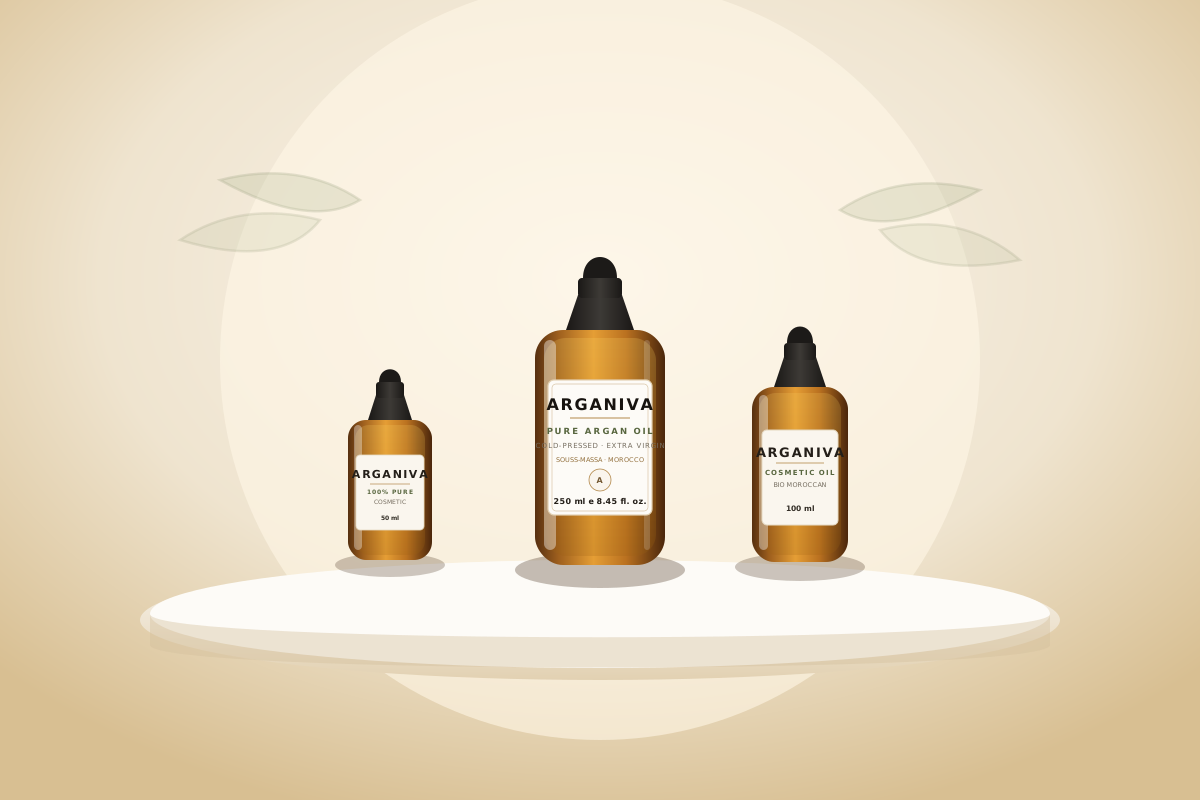
How do you choose authentic argan oil?
Check the ingredient list first — authentic argan oil should read close to “100% Argania Spinosa Kernel Oil” with nothing else added. Beyond that, treat unusually low prices and strong perfume-like scents as warning signs, and buy from a source that can actually answer questions about what you’re getting.
Start with the ingredient list
This is the single most reliable check available to you, and it takes ten seconds. Turn the bottle over and read the ingredients:
- What you want to see: “Argania Spinosa Kernel Oil” as the only ingredient, or close to it.
- What’s a red flag: a long list including other vegetable oils (sunflower, soybean, mineral oil), added fragrance, or preservatives, on a product still marketed simply as “argan oil” rather than clearly labeled as a formulated product or blend.
A blended product isn’t automatically a scam — some cosmetics legitimately combine argan oil with other ingredients — but it should say so on the label. The problem is products that imply pure argan oil while quietly diluting it.
Sanity-check the price
Authentic argan oil is genuinely expensive to produce: the fruit is hand-harvested, the nuts are hand-cracked one at a time, and the yield of oil per kernel is modest. See how argan oil is made for the full process. That production reality sets a rough floor on what real argan oil should cost.
If a bottle is priced dramatically below what you’d expect for a labor-intensive, small-batch product — especially in a high-tourist-traffic area — that’s a reasonable signal to ask more questions before buying, not necessarily to walk away entirely.
Use your nose
Pure argan oil has a specific, mild scent profile:
| Type | Expected scent | Red flag |
|---|---|---|
| Cosmetic | Light, faintly nutty | Strong floral, perfumed, or “clean” synthetic smell |
| Culinary | Toasted, pronounced nutty | Weak or absent toasted aroma, or an odd chemical note |
A strongly scented “argan oil” is usually telling you it’s been fragranced to mask a thinner, diluted base oil, or that it isn’t primarily argan oil at all. Read more in what does argan oil smell like.
Check the color, but don’t over-rely on it
Cosmetic argan oil is typically a pale golden color; culinary argan oil is darker, amber to brown, from the roasting step. Color alone isn’t proof of authenticity since it can vary with filtration and batch, but an oil that’s very pale for a culinary product, or unusually dark/cloudy for a cosmetic one, is worth a second look alongside the other checks here.
Buy from a source you can actually ask
This is the practical checklist item people skip. Authentic producers and sellers can usually answer simple, specific questions: which region the oil is from, whether it’s roasted or unroasted, how it’s pressed. A seller who can’t or won’t answer those questions, or gives vague answers, is a weaker bet than one who can — regardless of packaging or price. This applies whether you’re buying in a souk, from a cooperative, or ordering online.
The packaging itself is a smaller clue
Authentic argan oil is sensitive to light, which is why it’s usually sold in tinted glass — amber or dark green — rather than clear glass or plastic. This isn’t a strict rule on its own, since packaging choices vary by producer, but a bottle sold in clear glass and displayed in direct sunlight on a market stall is more likely to have already lost some quality by the time you buy it, regardless of how authentic the oil inside originally was. If you have a choice between two otherwise similar bottles, the one protected from light is the safer bet.
Consider how the seller talks about the oil
Beyond direct questions, pay attention to how a seller describes what they’re selling. Genuine sellers, whether at a cooperative or an online source, tend to be specific and consistent — the same explanation of roasted versus unroasted, the same production description, whether you ask today or ask again in a different way. Vague, shifting, or overly dramatic claims — a seller promising the oil will fix a health condition, for instance, or claiming a certification that can’t be shown or explained — are worth treating skeptically. A confident, specific, boring answer is usually a better sign than an enthusiastic, vague one.
Quick checklist
- Ingredient list reads close to 100% Argania Spinosa Kernel Oil
- Price is realistic for a hand-produced oil, not suspiciously cheap
- Scent matches what’s expected — mild and nutty (cosmetic) or toasted (culinary), not perfumed
- Color and clarity look consistent with the product type
- The seller can answer basic questions about the oil’s origin and production
Where to go from here
- Buying while in Morocco specifically? See how to buy argan oil in Morocco.
- Ready to order? Browse cosmetic argan oil and culinary argan oil.
Frequently asked questions
What should the ingredient list say on authentic argan oil?
It should read close to "100% Argania Spinosa Kernel Oil" (the plant's scientific name) with no long list of other oils, fragrance, or preservatives, unless it's clearly labeled as a blend or formulated product rather than pure oil.
Is a strong floral or perfume smell normal for argan oil?
No. Pure cosmetic argan oil has a light, faintly nutty scent, and pure culinary argan oil has a toasted, nutty aroma. A strong perfume-like smell usually means fragrance has been added, which is common in diluted or lower-quality products.
Is cheap argan oil always fake?
Not necessarily fake, but a price far below what the labor-intensive production process would justify is a real warning sign that the oil has been diluted or heavily cut with cheaper oils.
Related products
Related articles
How Is Argan Oil Made?
From fruit on a tree to oil in a bottle, argan oil goes through a slow, mostly manual process that hasn't changed much in generations.
What Does Argan Oil Smell Like?
Argan oil's smell is one of the easiest and fastest ways to check what you're actually holding — if you know what to expect.
How to Buy Argan Oil in Morocco
There's more than one way to buy argan oil while you're in Morocco, and each route has real tradeoffs worth knowing before you're standing in a souk with limited time.
The Complete Guide to Moroccan Argan Oil
One reference covering everything from what argan oil actually is to how to order it, whether you're shopping from abroad or standing in a Marrakech souk.